
Theory of Change
Our Misson
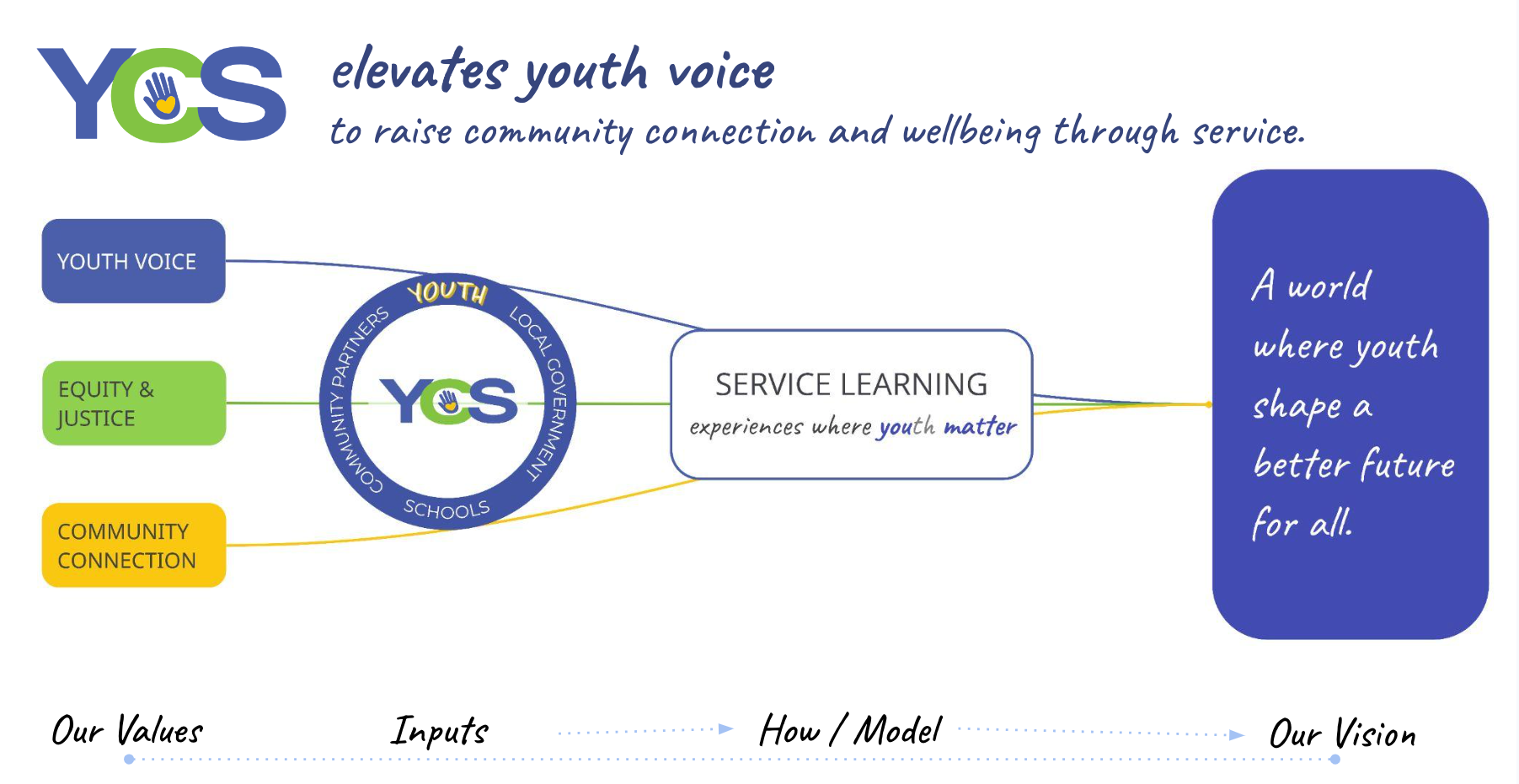
YCS elevates youth voice to raise community connection and wellbeing through service.
Our mission is purposefully simple yet carries profound depth. We focus on three primary aspects: who we center, what we aim to achieve, and how we do it.
Who: At the heart of our mission is elevating youth-voice and centering their agency.
Note: we don’t use the words "help" or "aid." Our youth are powerful, creative, and imaginative. We see our role as uplifting their voices, creating choices, giving them a platform for their perspectives, and highlighting their leadership and work.What: Our mission aims to raise community connection and wellbeing. The essence of our work lies in bringing people together to strengthen wellbeing and social justice in our communities.
How: Our means to the mission is delightfully simple yet profoundly impactful - service.
Our Vision
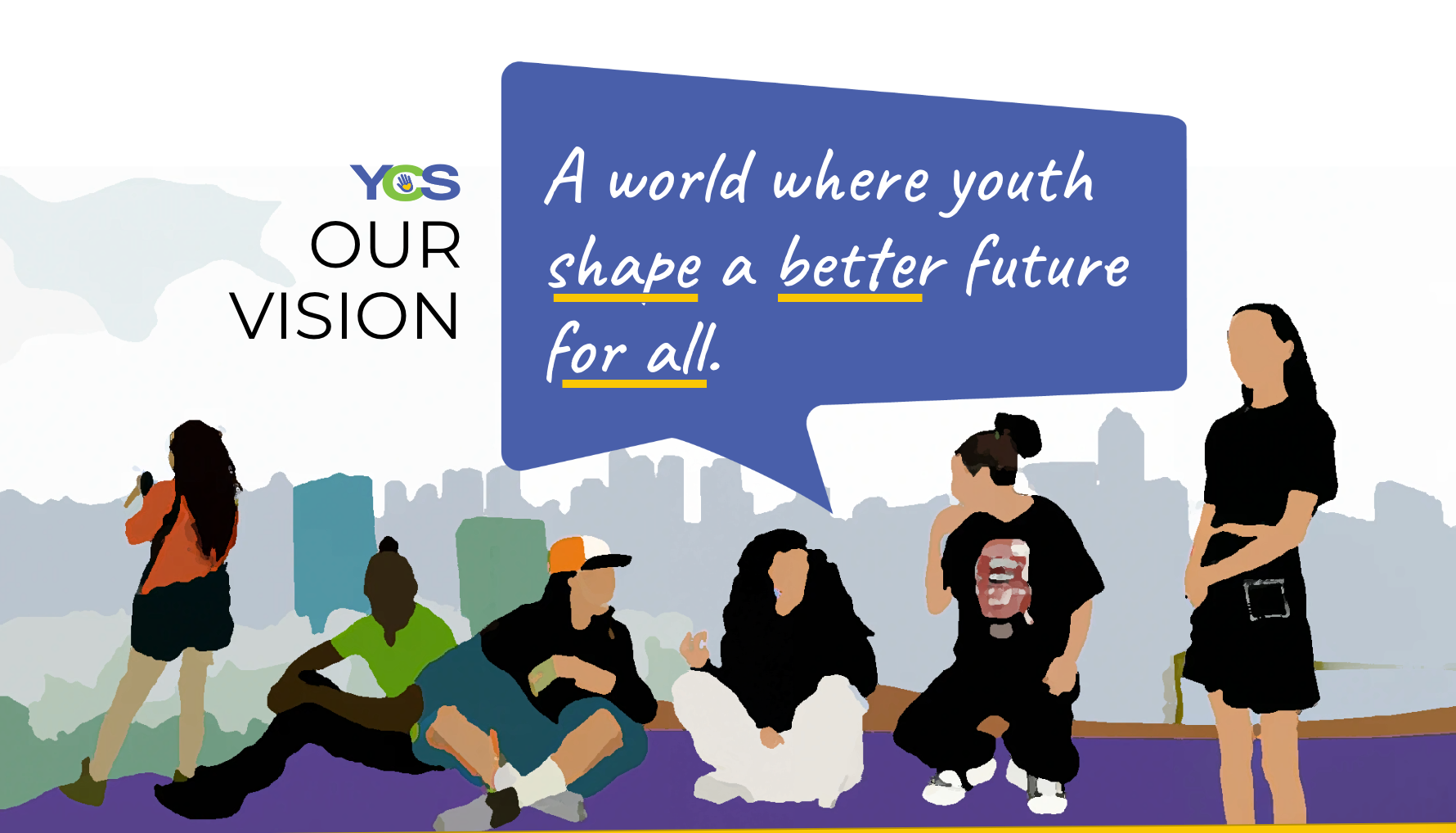
Our mission is in service of our vision: A world where Youth shape a better future for all.
Shaping: The use of the word 'shape' signifies that we belied that the future can be shaped, molded, and influenced. So often, we can start to believe that we do not have the agency to change structures and systems around us. The word ‘shape’ is an invitation for our youth to engage and be a part of making a difference. It evokes the change and movement their engagement can create.
Better Future: this is an open invitation for youth to define what 'better' means to them. Their imagination and vision for 'better' can often surpass our own.
For All: Our vision is inclusive, it is better for all. Our work hopes to further communities where we do not leave anyone behind, and we center our efforts on equity and social justice.
In the following sections, we will delve deeper into this model, zooming in on each element to offer a more nuanced understanding.
Our Values
Youth Voice
Equity & Justice
Community Connection
Our focus on youth voice, community connection, and equity & social justice permeates every aspect of our work.
These values are woven into the fabric of our organization, shaping our approach to the who, what, and how of our programs. By centering the voices of young people, building meaningful connections within the community, and striving for equity and justice, we are working to create a better future for all.
Inputs
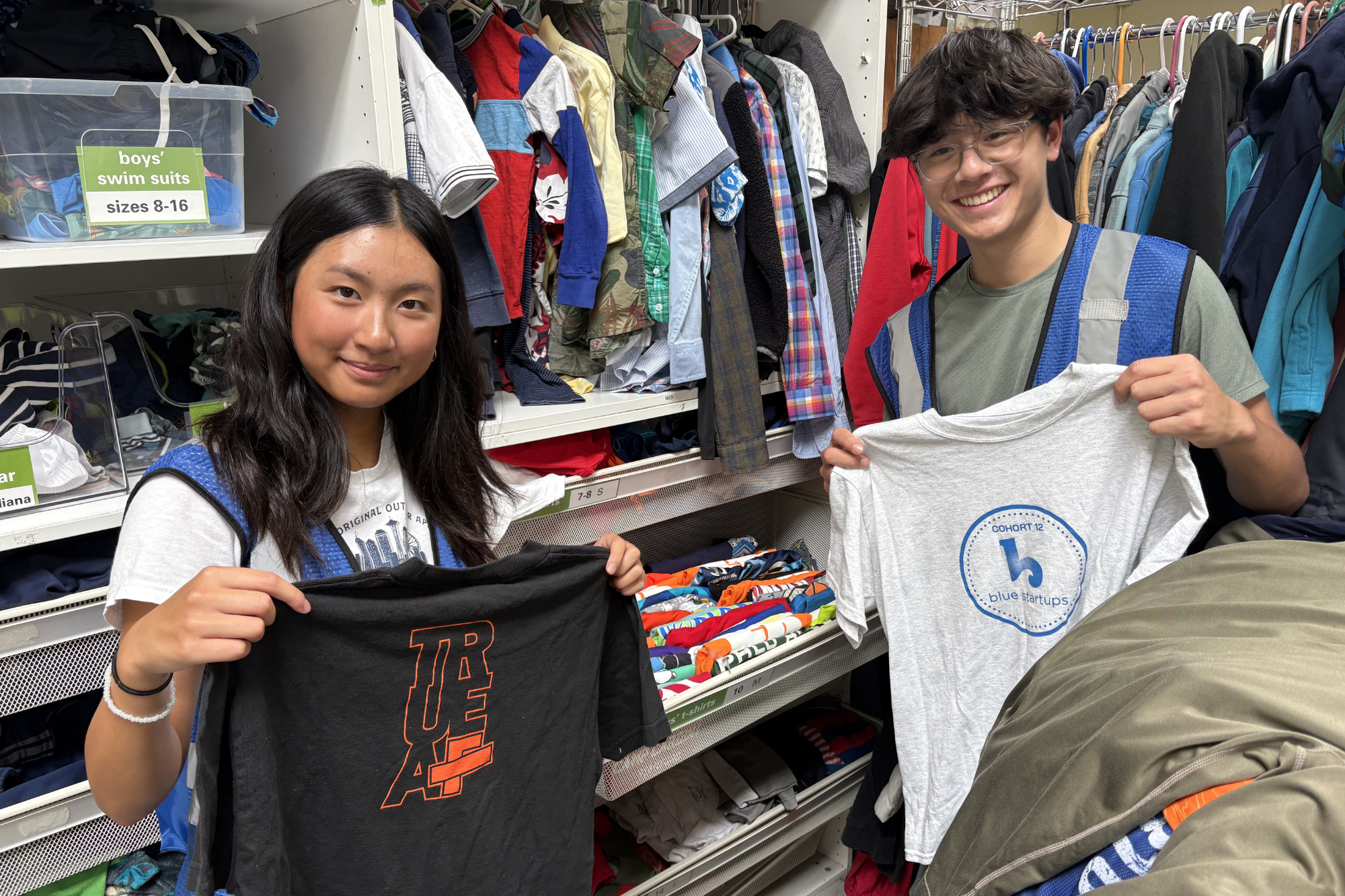
Evidence-based programming that builds on the lived experiences, interests, and values of youth.
Ecosystem connections - bringing together schools, local government, service partners, community champions, and experts to center youth leadership, community connection, and civic engagement.
Growing a diverse and motivated team that creates impactful and inclusive experiences for youth.
Investing and raising resources to enable learning loops for each stakeholder.
Our Model
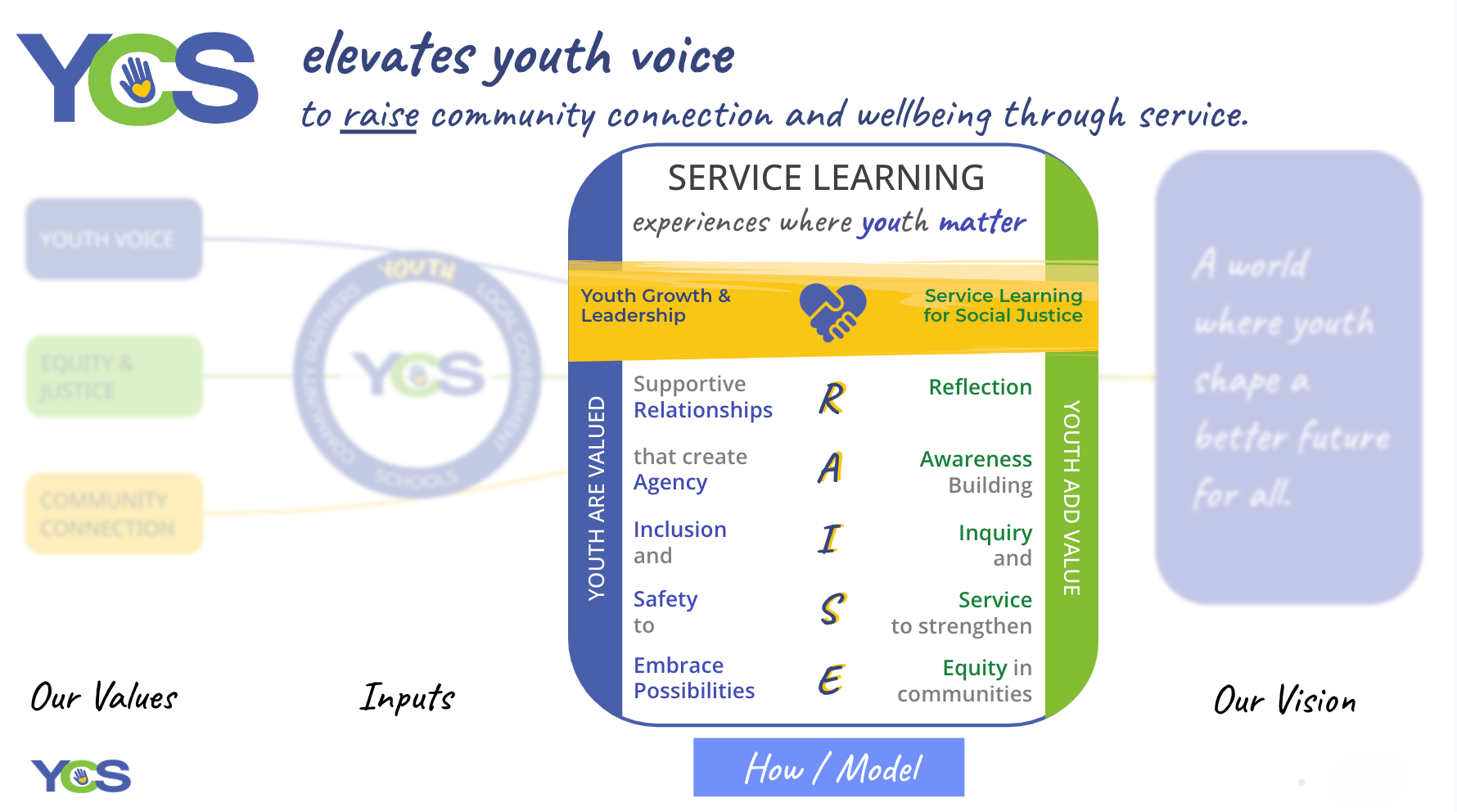
RAISE Model – articulates practices that underpin youth development and service learning for social justice
It starts with a sense of mattering
Let's delve into the model of service learning experiences where youth matter. The term "mattering" deserves a moment's focus. As a psychological construct, "mattering" reflects the quintessential human quest for significance. It represents a two-part equation: firstly, feeling valued and feeling seen in our relationships and community, and secondly, adding value and making a difference in the contexts we operate in.
Research indicates that mattering correlates strongly with well-being, a perceived sense of fairness, self-esteem, and even physical health. Conversely, a lowered sense of mattering can lead to increased depression, anxiety, antisocial behaviors, and self-harm. It represents the antithesis of dispossession and marginalization and intersects with inclusion, social justice, and youth health, making it incredibly powerful.
RAISE MODEL: youth are valued, youth add value
Our approach brings together two integral aspects of a sense of mattering:
We focus on creating contexts where youth feel welcomed and included, where they can grow and demonstrate leadership.
We ensure that their service-based work is meaningful and impactful.
Our RAISE model articulates the evidence-backed core practices that underpin both sides of this equation, ensuring we strive to access the specific actions and approaches aligned with social-emotional learning and leadership development, and critical service learning designed to strengthen equity and social justice.
| Youth Growth & Leadership Youth are valued | RAISE | Service Learning for Social Justice Youth add value |
|---|---|---|
| Youth Growth & Leadership Supportive Relationships | R | Service Learning for Social Justice Reflection |
| Youth Growth & Leadership that create Agency | A | Service Learning for Social Justice Awareness Building |
| Youth Growth & Leadership Inclusion and | I | Service Learning for Social Justice Inquiry and |
| Youth Growth & Leadership Safety to | S | Service Learning for Social Justice Service to strengthen |
| Youth Growth & Leadership Embrace Possibilities | E | Service Learning for Social Justice Equity in communities |
Youth Growth & Leadership
Supportive Relationships
Supportive relationships are the bedrock, with numerous meta-analyses showing they drive positive youth outcomes. They help us feel valued and grow our social-emotional learning skills.
Agency
Supportive relationships are supportive when they create agency. The support is not a monopoly focused on the care, it's centered on the youth, their choices, and the growth that it unlocks for them.
Inclusion &
Inclusivity is a core principle - all voices are valued.
Safety to Embrace Possibilities
This is not the kind of safety I feel when I grab a blanket, tuck myself in with a tub of ice cream, and watch TV. Because generally, when I'm doing that, I'm just hiding away from the world.
It's the kind of safety that encourages us to experience the discomfort necessary for growth.
A real visceral example of this for me is my experience with an eight-year-old who had a very intense fear of Heights. When she went to learn swimming, she just couldn't do a cannonball. She would just sit down at the side of the pool and shut down.
And her swim instructor did what I thought was such an artful job of being that trusted adult in her life. Her instructor kept finding the next step that challenged her. At first, it was sitting on the edge and having someone hold her hand as she got pulled in, and gradually it was squatting, and then standing. And today, that kid is jumping in with joyful abandon. It’s a beautiful illustration of safety where the agency of a young person and the support of a trusting adult come together to create possibilities.
Service Learning for Social Justice
Service learning itself is correlated with clear positive outcomes for youth. We know that those who participate in service learning tend to be more tolerant, more culturally aware, build stronger communication skills, and have stronger critical thinking capacity.
Dr. Tania Mitchell at the University of Minnesota has done foundational work showing why it's vital to approach service learning from a critical equity and social justice lens. Without the social justice orientation, it is so easy for service learning to become an exercise in entrenched structural patriarchy and the assumed privilege of helping.
The critical service learning framework that informs YCS’s work, places a unified emphasis on authentic and supportive relationships, highlighting the diversity of assets each of us brings from our experiences, and emphasizes serving alongside community members from a place of shared power and connection.
This half of RAISE encapsulates the essential elements of a service learning experience focused on promoting social justice and equity:
Reflection
This involves deep thinking and analysis of the service learning experience, the community being served, and the broader social issues at play. Reflection allows participants to consider their personal growth, how their actions impact others, and the transformative potential of their work.
Awareness Building
Participants increase their understanding of social issues, structural inequalities, and injustices that affect communities. Through increased awareness, they gain the necessary knowledge to effect positive change and contribute towards more equitable communities.
Inquiry
This aspect encourages participants to ask tough questions, challenge assumptions, and explore complex issues surrounding their service learning work. Inquiry fosters critical thinking and empowers participants to seek solutions to social challenges.
Service to Strengthen Equity in Communities
The ultimate goal is to provide service that promotes and strengthens equity within communities. It's about recognizing and challenging systemic inequities, contributing to social justice, and creating more inclusive and equitable communities.
Overall, the RAISE framework emphasizes the need for service learning to go beyond superficial volunteerism and towards a more profound, authentic connection that creates mutual value for participants, addresses the root causes of social issues, cultivates critical thinking, and drives positive, equitable change.
Measurable Outcomes from YCS programs
Increased well-being and sense of mattering
Increased social-emotional learning and leadership development
Increased understanding of social challenges
Increased advocacy and action on issues of social equity and justice
Increased connection across youth and community.
Tangible community needs met through service
Vision and Ultimate Goals
Our ultimate vision is a world where youth shape a better future for all.
By elevating youth voices, we aim to foster a sense of empowerment and agency in our participants, equipping them with the skills and experiences they need to become leaders of tomorrow.
We believe that by centering the work of young people in community service and social justice, we can foster stronger, more equitable communities and create lasting change.
Our ultimate goals are:
1. The realization of more equitable communities, marked by greater empathy, connection, and understanding.
2. The nurturing of a new generation of leaders, who, empowered by their YCS experiences, will continue to serve and advocate for their communities.
3. The amplification of youth voices in the collective effort towards a better future.
Interested in Getting More Involved?
Sign up for our Do Service Platform or email ycs@youthcommunityservice.org to learn more about how we can support your school in bringing the transformative power for service-learning to you.